
“Family is not an important thing. It’s everything.” — Michael J. Fox
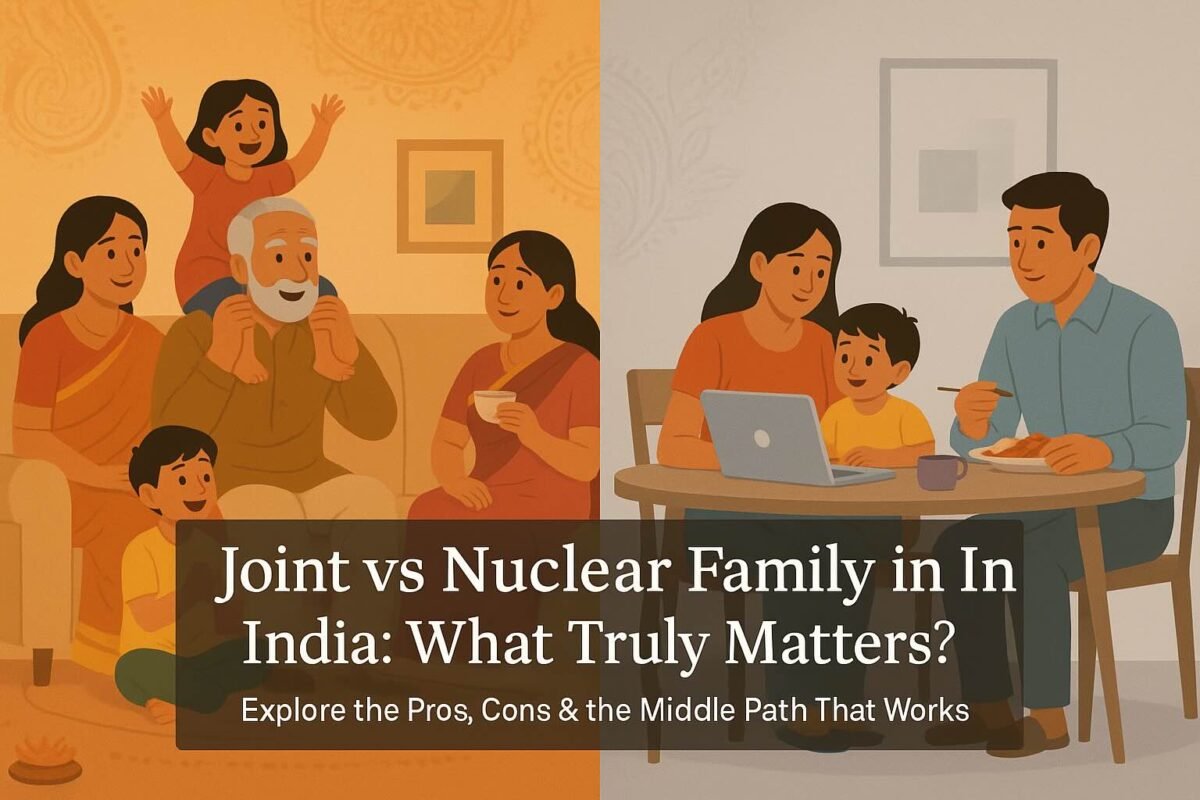
India has long been known for its deeply rooted family culture — a tapestry woven with generations of togetherness, traditions, and unspoken bonds. For decades, the joint family system stood as a cornerstone of Indian life, especially in small towns and rural areas. It wasn’t just a way of living — it was a way of being. But as times have changed, the rise of nuclear families has brought a profound shift in how we define home, care, and connection.
The age-old debate of Joint Family vs Nuclear Family is more than just a sociological question — it’s a lived reality for millions of Indians today. And honestly? It’s not about which one is better. It’s about understanding the unique dynamics, benefits, and challenges of both.
Urbanization, rising aspirations, career mobility, and the pressures of modern life have nudged many towards the nuclear setup. But in this evolving family structure, what are we gaining — and what are we losing?
In this heartfelt reflection, we’ll go beyond the usual pros and cons of Joint Family vs Nuclear Family. We’ll talk about the real emotions behind closed doors — the joy of shared meals and the tension of clashing values, the freedom of independence and the ache of isolation.
We’ll also explore whether it’s time to stop choosing between joint and nuclear, and instead ask a deeper question: Can we reimagine a hybrid model that brings the best of both?
This isn’t just an intellectual debate — it’s about the young mother who’s overwhelmed without her parents' help, the elderly parent who misses the sound of grandchildren, and the child who’s raised more by devices than by stories from their grandparents.So, whether you’re living in a joint family, a nuclear setup, or somewhere in between, this post is for you. Together, we’ll explore what it truly means to belong — and how we can create families that are emotionally fulfilling, practically sustainable, and lovingly intergenerational.
What Is a Joint Family?

In the context of Joint Family vs Nuclear Family in India, a joint family traditionally consists of multiple generations living together. Grandparents, parents, children, uncles, aunts, and cousins often share the same roof and responsibilities.
This system is built on collectivism, shared living, and mutual dependency — emotionally and financially.Pros of a Joint Family in India
1. Built-in Support System: In a joint family, you’re surrounded by helping hands. Whether it’s child-rearing, house chores, or emotional breakdowns — there’s always someone to lean on.
2. Shared Finances: Living together means pooling resources. Expenses like groceries, utilities, and even major events like weddings are shared. This relieves financial pressure on individual members.
3. Cultural Continuity: From Diwali pujas to Sunday biryanis, a joint family ensures that age-old traditions don’t fade. Kids imbibe values, rituals, and languages organically.
4. Grandparent Bonding: Children in joint families benefit from the love and wisdom of grandparents. This fosters empathy, resilience, and a sense of belonging.
Cons of a Joint Family:
1. Lack of Privacy: When you’re always surrounded, carving out personal space can be tough. Decision-making becomes communal, which may not suit everyone.
2. Conflicting Opinions: Generational gaps, different priorities, and clashing egos can cause tension. From parenting styles to dinner menus — there can be friction.
3. Gender Bias: In many traditional joint families, women often face rigid expectations — household work, limited autonomy, and fewer career opportunities.
4. Emotional Burnout: Being the emotional glue of a large family, especially without having a say, can lead to mental fatigue and resentment.
“In joint families, you’re never alone. But sometimes, you’re not heard either.”
What Is a Nuclear Family?
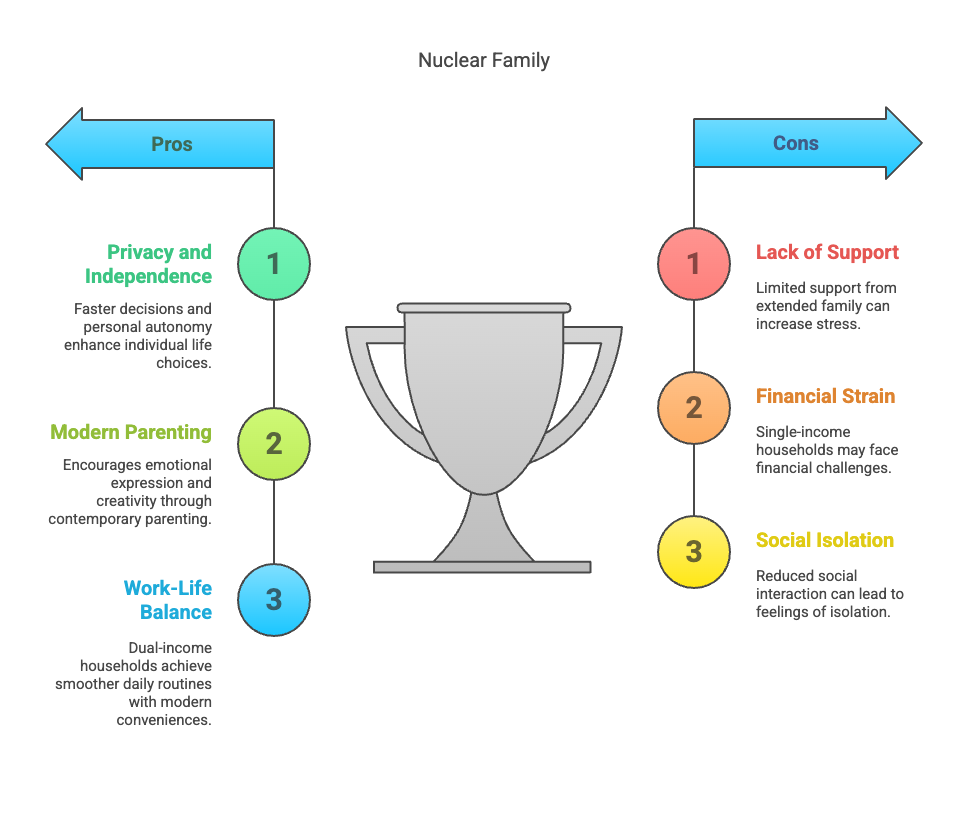
When exploring Joint Family vs Nuclear Family in India, the nuclear family is often seen as a modern alternative. It consists of just parents and children living independently. It’s common in urban India, driven by career choices, educational opportunities, and a desire for autonomy.
Pros of a Nuclear Family in India
1. Privacy and Independence: Decision-making is faster and more personalized. Each member has more autonomy over their life choices.
2. Modern Parenting: Parents in nuclear setups often follow contemporary parenting techniques, encouraging emotional expression, creativity, and openness.
3. Work-Life Balance: Dual-income households with gadgets, delivery services, and hired help often achieve a smoother daily rhythm.
Cons of a Nuclear Family in India
1. Isolation: With no immediate family around, crises can become overwhelming. You’re on your own during sickness, emergencies, or emotional lows.
2. Elder Neglect: A major downside is disconnection from aging parents. Physical distance often turns into emotional distance.
3. Childcare Stress: Without extended family support, balancing work and child-rearing becomes taxing and expensive.
4. Lack of Cultural Anchoring: Kids may grow up unfamiliar with rituals, values, and language traditions that their grandparents upheld.
“We moved out to breathe, but in doing so, lost the oxygen of family support.”
The Real Emotional Landscape: Raw but Real
In the debate of Joint Family vs Nuclear Family in India, emotions tell the deeper story. Indian millennials and Gen Zs are straddling two worlds — born in joint families, thriving in nuclear ones. The price?
- Elders are lonelier
- Children are growing up with gadgets and daycare
- Parents are exhausted and overstretched
We rarely speak about this burnout — but we should.Why Did Nuclear Families Rise in India?
1. Urban Migration: Jobs and colleges moved people to metro cities.
2. Space Constraints: Apartments replaced large ancestral homes. Physical space shrunk, so did living arrangements.
3. Career Demands: Professional life became more demanding, leaving little room for traditional family roles.
4. Changing Values: Individualism gained popularity. Personal choices began to take priority over collective decisions.
This shift wasn’t a rebellion — it was a ripple effect of modernisation.
But somewhere, the support system that once held Indian families together started eroding. Not intentionally — just circumstantiallyIs One Better Than the Other?
Short answer: No.
Long answer: It depends entirely on your lifestyle, values, and evolving needs — there’s no universal “better,” only what’s better for you at a particular phase of life.
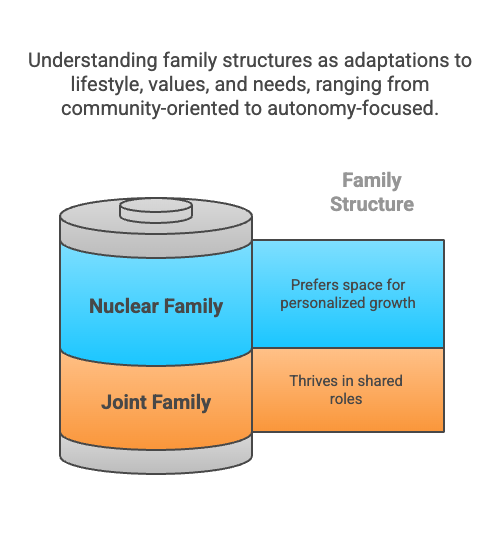
When we talk about Joint Family vs Nuclear Family in India, we must understand that both models are not opposites — they are adaptations.
Each structure is a response to its time, space, and cultural shifts. Choosing one over the other is not a question of right vs wrong, but what fits vs what doesn’t.
- If you thrive in community, love tradition, and find comfort in shared roles, a joint family might feel like a warm hug.
- If you cherish autonomy, prefer space, and want personalized growth, a nuclear setup can offer room to breathe.
What’s important is to stay flexible. Many families today don’t fit neatly into one category. A couple might start in a nuclear home, return to a joint setting during parenthood, and then evolve into a hybrid model as parents age.
Think of family structures as homes. Some people like apartments with elevators, others prefer ancestral havelis with courtyards. What matters is that the roof doesn’t leak and the walls feel like they’re holding you, not boxing you in.
So no, one structure isn’t “better.” But awareness of the pros and cons? That is essential. Because when you know the trade-offs, you can make intentional, compassionate choices — not reactive ones.
How to Thrive in Today’s Nuclear Setup (Without Losing Family Values)
1. Build Your Chosen Family: Create a circle of trust with neighbors and friends. Intentionally nurture those bonds.
“You don’t need to be blood to be family.”
2. Plan for Eldercare & Childcare: Don’t wait for burnout. Plan proactively — explore co-housing, shared services, or hybrid spaces.
3. Prioritize Physical Presence: Don’t let WhatsApp calls replace warm hugs. Regular visits, short getaways, and family meetups go a long way.
4. Celebrate Your Traditions: Even as a nuclear unit, observe festivals with heart. Culture is not size-dependent.
5. Financially Include Elders: Invite them into your budgeting, planning, and even passion projects. Let them feel needed.
6. Pass On Family Stories: Don’t let childhood memories stay locked in your head. Share them. Let your kids feel part of a longer legacy.
Gentle Story from Real Life
A working couple in Delhi, both doctors, lived in a nuclear setup. Their 4-year-old child had speech delay. The solution came when the grandmother moved in. With her storytelling, care, and consistent presence, the child bloomed. Not every grandparent can move in — but the spirit of connection can be revived in other ways.
A New Way Forward: Hybrid Indian Family Models
Multi-Unit Homes: Families living in separate flats on the same floor or building, with occasional shared meals and support.
Community Living Spaces: Think: co-housing models with eldercare + daycare — your business idea! Structured intergenerational homes.
Monthly Family Retreats: Mini-reunions not just for fun but for emotional check-ins. Hosted rotationally among siblings or cousins.
Final Thoughts: Don’t Romanticise or Demonise Either
Don’t romanticise the past or demonise the present. Whether you’re in a joint family or a nuclear one, the goal is simple — connection.
If your family feels safe, valued, and heard — you’re doing it right.
“Families are the compass that guide us. They are the inspiration to reach great heights, and our comfort when we occasionally falter.” — Brad Henry
🧭 Bonus Freebie:
👉 Download your Free Wellness Guide for Modern Indian Families — available now on both our websites.
1 thought on “Joint Family vs Nuclear Family in India: Pros, Cons & a Better Way to Live”